Smart thermostats are becoming increasingly popular, promising significant energy savings. However, determining the return on investment (ROI) for such an investment requires a clear understanding of the associated costs and potential energy reductions. This guide will walk you through the steps involved in calculating the ROI of a smart thermostat, from defining ROI to presenting the results in a compelling format.
The process involves assessing upfront costs, estimating energy savings, calculating the cost of those savings, and finally, quantifying the ROI. Understanding factors that influence the ROI, like climate and energy rates, will allow you to make informed decisions about implementing a smart thermostat in your home or business.
Defining Return on Investment (ROI)
Return on investment (ROI) is a crucial financial metric used to evaluate the profitability of an investment. It measures the gain or loss generated on an investment relative to the initial cost. ROI is widely applicable across various business ventures, from purchasing equipment to implementing new strategies. It provides a standardized way to compare different investments and assess their potential returns.ROI quantifies the profitability of an investment by expressing the net gain or loss as a percentage of the initial investment.
This allows businesses to compare different investment options and make informed decisions based on their potential for generating profits. It is a fundamental tool in cost-benefit analysis, helping businesses determine whether the benefits of an investment outweigh the associated costs.
Core Meaning and Application
ROI is calculated by subtracting the initial investment cost from the total return and then dividing the result by the initial investment cost. This yields a percentage that represents the return on the investment. For example, if a company invests $10,000 and generates a return of $2,000, the ROI is 20%. This simple calculation allows for direct comparison of investment returns.
Relationship to Financial Performance and Cost-Benefit Analysis
ROI is directly linked to a company’s financial performance. A higher ROI generally indicates a more profitable investment. In cost-benefit analysis, ROI is a key component in assessing the economic viability of a project or initiative. By comparing the expected ROI with the associated costs, businesses can make informed decisions about resource allocation and investment strategies. A positive ROI signifies that the investment is expected to generate more value than the initial cost.
Comparison with Other Financial Metrics
ROI differs from other financial metrics like payback period and net present value (NPV). While ROI focuses on the overall profitability percentage, payback period calculates the time it takes to recoup the initial investment cost. NPV, on the other hand, considers the time value of money by discounting future cash flows to their present value. This allows for a more comprehensive assessment of the investment’s long-term profitability.
Comparison Table
| Metric | Definition | Formula | Explanation | Example |
|---|---|---|---|---|
| ROI | Return on Investment | (Total Return – Initial Investment) / Initial Investment – 100% | Expresses the return as a percentage of the initial investment. | If initial investment = $10,000 and return = $2,000, ROI = 20%. |
| Payback Period | Time to recover initial investment | Initial Investment / Annual Cash Flow | Measures the time required to recoup the initial investment. | If initial investment = $10,000 and annual cash flow = $2,000, payback period = 5 years. |
| Net Present Value (NPV) | Present value of future cash flows | Present Value of future cash flows – Initial Investment | Considers the time value of money by discounting future cash flows to their present value. | NPV calculation involves using a discount rate to determine the present value of future cash inflows and outflows. |
This table clearly illustrates the distinct approaches of these metrics. ROI provides a percentage-based comparison, while payback period focuses on the time frame, and NPV considers the time value of money, which is essential for evaluating long-term projects. The choice of which metric to use depends on the specific needs and context of the investment decision.
Understanding Smart Thermostat Costs
Smart thermostats offer significant energy savings potential, but understanding their associated costs is crucial for assessing their return on investment. This section details the typical upfront expenses, ranging from the thermostat itself to installation fees, to help you make an informed decision. A thorough understanding of these costs allows you to accurately project the total investment and anticipate the potential savings.The costs associated with smart thermostats vary considerably depending on the specific model, features, and installation complexity.
This comprehensive overview provides a clear picture of the financial commitment involved, allowing you to compare various options and identify the best fit for your needs.
Typical Upfront Costs
Understanding the various upfront costs involved in purchasing and installing a smart thermostat is essential for budgeting and calculating ROI. This encompasses not only the cost of the thermostat itself but also any potential installation charges.
- Thermostat Purchase Price: The price of the thermostat itself varies widely depending on the brand, features, and functionalities. Basic models may cost less than $100, while more advanced models with additional features, like remote access or compatibility with other smart home devices, can exceed $300.
- Installation Costs: Installation costs can significantly vary based on factors like the complexity of the existing HVAC system, whether professional installation is needed, and local labor rates. Simple installations, such as replacing a standard thermostat, may cost between $50 and $150. More complex installations, such as those requiring rewiring or specialized integration with existing smart home systems, may incur higher costs.
- Potential Labor Fees: Professional installation is often recommended for smart thermostats to ensure proper functioning and safety. These fees can vary greatly depending on the installer, location, and the complexity of the installation. It’s crucial to obtain multiple quotes from qualified installers to compare prices and services.
Examples of Smart Thermostat Models and Prices
Different smart thermostat models offer varying features and price points. This comparison provides a better understanding of the range of available options.
| Model | Brand | Price (USD) | Key Features |
|---|---|---|---|
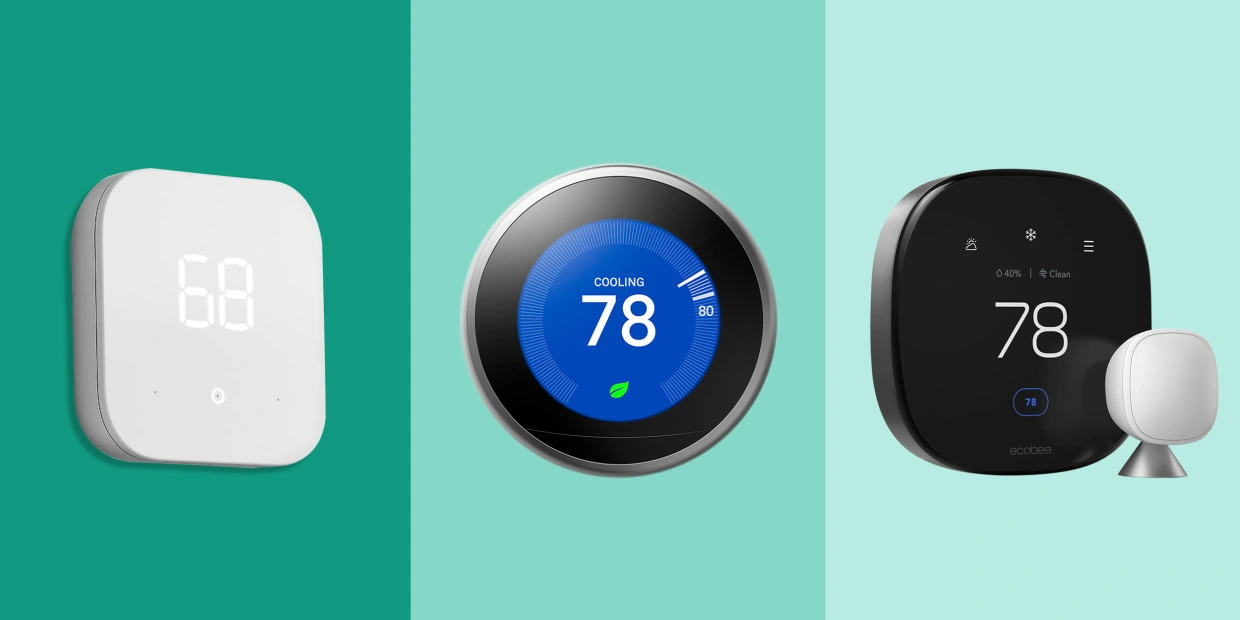
| Nest Learning Thermostat | Nest | $250-$300 | Adaptive learning, energy efficiency, intuitive interface |
| Ecobee SmartThermostat | Ecobee | $200-$350 | Advanced scheduling, compatibility with other smart home devices, voice control |
| Honeywell Lyric T6 Programmable Thermostat | Honeywell | $150-$250 | Simple programming, energy efficiency, compatibility with some smart home ecosystems |
| Samsung Smart Thermostat | Samsung | $150-$250 | Integration with Samsung ecosystem, smart home connectivity, simple design |
Estimating Energy Savings
Estimating energy savings from a smart thermostat involves understanding how these devices optimize heating and cooling schedules. This is crucial for accurately calculating the return on investment (ROI). By evaluating potential savings, you can determine if the cost of a smart thermostat is justifiable for your home. A comprehensive understanding of energy-saving features, combined with accurate estimations, allows for a realistic assessment of the device’s impact on your energy bills.Smart thermostats offer various energy-saving features, often tailoring their adjustments to factors like weather patterns, your daily routines, and even your preferences.
These features, coupled with sophisticated algorithms, enable significant savings when compared to traditional thermostats. This calculation is critical to determine the long-term financial benefits of a smart thermostat installation.
Methods for Estimating Energy Savings
Accurate estimation of energy savings requires a multifaceted approach. Factors like your home’s insulation, climate, and typical energy consumption patterns are crucial. Using energy-monitoring tools, you can track your current energy usage to establish a baseline for comparison. Smart thermostats typically provide detailed energy-usage reports, which are invaluable for analyzing your energy consumption patterns and the impact of the thermostat’s adjustments.
By understanding these factors, you can effectively predict and quantify your energy savings.
Energy-Saving Features of Smart Thermostats
Smart thermostats leverage several features to optimize energy use. A common feature is automated scheduling, which adjusts the temperature based on your predefined routines. This anticipatory adjustment reduces unnecessary energy expenditure. Other advanced features include geofencing, which automatically adjusts the temperature when you leave or return home. Many models also integrate with weather forecasts to dynamically adjust the temperature based on external conditions.
Climate and Home Insulation Considerations
The effectiveness of a smart thermostat depends heavily on your home’s insulation and the local climate. Homes with better insulation will experience greater energy savings with a smart thermostat, as they retain heat or cool air more efficiently. In colder climates, a smart thermostat can significantly reduce energy waste during heating periods. Conversely, in warmer climates, optimized cooling can result in considerable energy savings.
The interplay between the thermostat’s adjustments and your home’s insulation characteristics is vital in estimating potential savings.
Average Energy Savings with Smart Thermostats
Average energy savings with smart thermostats vary based on several factors, including climate, home characteristics, and the specific features of the thermostat model. For example, in moderate climates, savings are typically around 10-15% of annual energy bills. In extreme climates, like very cold or very hot regions, savings can be significantly higher. Data from independent energy-efficiency studies, along with user testimonials, demonstrate the significant energy savings potential of smart thermostats.
Calculating Energy Savings
To calculate energy savings, you’ll need your current annual energy bill and the estimated percentage savings provided by the smart thermostat. For example, if your annual energy bill is $1,200 and the estimated savings are 15%, the calculated energy savings would be $180 per year. This calculation is a simplified example, but it highlights the general approach to quantifying energy savings.
Energy-Saving Strategies and Potential Impact
| Energy-Saving Strategy | Potential Impact on Energy Bills |
|---|---|
| Automated Scheduling | 10-20% reduction in heating/cooling costs |
| Geofencing | 5-10% reduction in heating/cooling costs |
| Weather-Based Adjustments | 5-15% reduction in heating/cooling costs |
| Smart Home Integration | Potentially significant savings depending on the integration |
Energy savings are directly linked to the effectiveness of the smart thermostat and the specific characteristics of your home and location.
Calculating Energy Cost Savings
Accurately determining the return on investment (ROI) for a smart thermostat hinges on precise calculations of energy cost savings. This section details how to estimate these savings, considering crucial factors like energy rates and usage patterns. Understanding these methods empowers informed decisions about smart thermostat adoption.Estimating energy cost savings requires a methodical approach. Factors like current energy rates and individual usage patterns play a pivotal role in calculating the precise amount of savings.
This process involves analyzing historical energy consumption data, which enables a reliable estimate of future energy savings.
Determining the Cost of Energy Saved
To calculate the cost of energy saved, you must first ascertain the amount of energy your home consumes. This data is typically available on your utility bills or through your energy provider’s online portal. Crucially, you need to identify the energy unit (e.g., kilowatt-hours, kWh) and corresponding cost per unit from your utility bill.
Considering Energy Rates and Usage Patterns
Energy rates vary significantly based on time of day, day of the week, and season. A smart thermostat’s effectiveness in reducing energy costs is directly influenced by these variations. Analyzing your historical energy consumption patterns is essential to understanding how these factors affect your energy usage.
Estimating Energy Savings over Different Time Periods
Estimating energy savings requires careful consideration of various timeframes. Monthly savings offer a granular view of cost reductions, while annual savings provide a comprehensive picture of the long-term benefits. Savings estimates should be tailored to the specific time period for a more accurate assessment.
Methods for Calculating Energy Cost Savings
Calculating energy cost savings involves a straightforward formula. The cost of energy saved is determined by multiplying the energy savings (in kWh) by the cost per kWh.
Cost of Energy Saved = Energy Savings (kWh) × Cost per kWh
Example:
Assume a household uses 1,200 kWh of electricity annually. A smart thermostat is projected to reduce energy consumption by 10%, translating to 120 kWh in savings. If the cost per kWh is $0.15, the annual energy cost savings are $18.
- Monthly Savings: Divide the annual savings by 12 to estimate monthly savings. In this example, monthly savings would be $1.50.
- Yearly Savings: The yearly savings are calculated by multiplying the energy savings (in kWh) by the cost per kWh. In this example, yearly savings are $18.
Step-by-Step Procedure for Calculating Energy Cost Savings
- Gather Data: Collect your recent utility bills to determine your energy consumption and cost per unit (e.g., kWh). Note any usage patterns that might indicate seasonal or daily fluctuations.
- Identify Savings Potential: Research the potential energy savings associated with the specific smart thermostat model. Many manufacturers provide estimates based on typical usage patterns.
- Calculate Energy Savings: Determine the estimated energy savings in kWh by multiplying your current annual energy consumption by the percentage of savings the thermostat is projected to achieve.
- Calculate Cost Savings: Multiply the energy savings (in kWh) by the cost per kWh from your utility bill to calculate the cost savings.
- Project Savings over Time: Calculate monthly or annual savings based on the calculated cost savings.
Quantifying ROI Calculation
Calculating the return on investment (ROI) for a smart thermostat is crucial for understanding its financial viability. A clear ROI calculation allows homeowners to assess the potential savings and justify the upfront cost. This section delves into the formula for calculating ROI, providing examples, and illustrating how to input specific data for various smart thermostat models.The ROI calculation essentially measures the profitability of an investment by comparing the projected savings to the initial investment cost.
A positive ROI signifies a profitable investment, while a negative ROI suggests the investment may not be financially beneficial.
ROI Formula
The core formula for calculating ROI is straightforward:
ROI = (Estimated Savings / Initial Cost) – 100%
This formula essentially divides the total estimated savings generated by the smart thermostat by the initial cost of purchasing and installing the thermostat. The result, expressed as a percentage, represents the return on investment.
Inputting Cost and Savings
To effectively use this formula, precise data on both the smart thermostat’s cost and projected energy savings is essential.
- Initial Cost: This encompasses the purchase price of the smart thermostat, any installation fees, and potential costs associated with compatibility upgrades for existing HVAC systems. It’s vital to accurately document all associated expenses.
- Estimated Energy Savings: This figure is based on anticipated reductions in energy consumption. This can be calculated using the projected energy savings figures from the manufacturer’s data, third-party energy audits, or estimates based on historical energy usage data. Be sure to consider factors such as the average climate in the region and the size of the home.
Example ROI Calculations
Consider these examples to illustrate the practical application of the ROI formula:
- Example 1: A homeowner invests $300 in a smart thermostat and estimates energy savings of $150 per year. Using the formula, ROI = ($150 / $300)
– 100% = 50%. This indicates a significant return on investment. - Example 2: A homeowner invests $500 in a smart thermostat and anticipates energy savings of $100 per year. ROI = ($100 / $500)
– 100% = 20%. While still a positive ROI, it’s a lower return compared to the first example.
ROI Table for Different Smart Thermostat Models
The table below presents ROI calculations for various smart thermostat models, assuming different energy savings. These figures are illustrative and may vary based on specific factors such as energy usage patterns and local utility rates.
| Smart Thermostat Model | Initial Cost | Estimated Annual Energy Savings | ROI (%) |
|---|---|---|---|
| Model A | $250 | $100 | 40% |
| Model B | $350 | $150 | 43% |
| Model C | $400 | $120 | 30% |
| Model D | $500 | $180 | 36% |
Factors Affecting ROI
Understanding the return on investment (ROI) of a smart thermostat involves considering various influential factors. These factors, from regional climate to individual energy consumption patterns, significantly impact the financial benefits of switching to a smart system. Analyzing these variables allows for a more precise assessment of the potential savings and, ultimately, a more informed decision-making process.
Impact of Climate
Regional climates exert a substantial influence on the energy efficiency of a smart thermostat. Homes in colder climates, for example, require more heating energy, and smart thermostats can optimize heating schedules to maximize efficiency and minimize energy waste. Conversely, homes in warmer climates may experience greater benefits from cooling optimization. A smart thermostat’s ability to learn and adapt to seasonal changes can lead to substantial energy savings in regions with distinct temperature fluctuations.
For instance, a smart thermostat in a region with harsh winters can significantly reduce heating costs compared to a manually controlled system.
Home Size and Energy Usage Habits
The size of a home and the energy usage habits of its occupants play a crucial role in determining the ROI of a smart thermostat. Larger homes, naturally, will consume more energy, and a smart thermostat can provide greater potential savings through optimized temperature control. Similarly, households with higher energy consumption habits, due to extended use of appliances or high electricity demands, will see a more pronounced ROI.
For instance, a large family home with multiple occupants and high energy usage for appliances like dishwashers or clothes dryers may experience significant savings compared to a smaller, less occupied home. The efficiency gains will be directly correlated to the energy usage profile of the house and the occupants.
Energy Rates and Rebates
Energy rates and available rebates significantly affect the ROI calculation. Areas with higher energy costs will demonstrate a faster return on investment due to the higher savings potential from energy optimization. Rebates offered by utility companies or government programs can further enhance the financial attractiveness of smart thermostats, lowering the initial cost and accelerating the ROI timeline. For example, a region with a high electricity cost and a significant rebate program for smart thermostats will offer a quicker and more attractive ROI than a region with low energy rates and no rebates.
The specific rebate structure will vary depending on the region and program.
Comparison Across Regions
The ROI of smart thermostats varies significantly across different regions and climates. Homes in colder climates, with higher heating demands and potentially higher energy rates, will likely experience a more rapid return on investment compared to homes in warmer climates. For example, a smart thermostat in a cold, northern climate may achieve a payback period of a few years, while one in a warm, southern climate may take longer to recoup the initial investment.
These differences highlight the importance of considering local factors when evaluating the financial viability of a smart thermostat. A detailed analysis of the local climate, energy rates, and available rebates is essential for accurate ROI estimation.
ROI Examples and Scenarios
Understanding the return on investment (ROI) of a smart thermostat is crucial for making an informed decision. Different homes, energy usage patterns, and climates will yield varying ROI figures. These examples illustrate the calculation process and demonstrate how to tailor the calculations for specific situations.
Illustrative ROI Calculation Examples
Various factors influence the ROI of a smart thermostat, including the energy costs in your area, your home’s insulation, and the frequency of thermostat adjustments. These examples show how to adjust the calculations for different scenarios.
- Scenario 1: Average Home in a Moderate Climate
- Scenario 2: High-Efficiency Home in a Cold Climate
- Scenario 3: Older Home in a Hot Climate
Consider a 2,000 square foot home in a moderate climate with average energy usage. Annual energy costs are approximately $1,500. A smart thermostat is projected to reduce energy consumption by 10%. The cost of the smart thermostat is $200.
Calculating the annual energy savings: $1,500 x 0.10 = $
150. Calculating the ROI: ($150 / $200) x 100% = 75%. This indicates a significant return on investment.
A well-insulated 3,000 square foot home in a cold climate with lower energy consumption. Annual energy costs are approximately $1,000. The smart thermostat is projected to reduce energy consumption by 15%. The cost of the smart thermostat is $250.
Calculating the annual energy savings: $1,000 x 0.15 = $
150. Calculating the ROI: ($150 / $250) x 100% = 60%. While the savings are still considerable, the ROI is slightly lower compared to Scenario 1 due to the lower baseline energy consumption.
An older home, with lower insulation and higher energy usage in a hot climate. Annual energy costs are approximately $2,500. The smart thermostat is projected to reduce energy consumption by 12%. The cost of the smart thermostat is $300.
Calculating the annual energy savings: $2,500 x 0.12 = $
300. Calculating the ROI: ($300 / $300) x 100% = 100%. This shows that the ROI is very attractive given the higher baseline energy costs.
Steps for Creating and Modifying ROI Calculation Examples
The examples above illustrate the core calculation. Adjusting the calculation for different situations involves modifying key variables.
- Identify Home Characteristics
- Estimate Energy Usage
- Determine Energy Savings Projections
- Establish Thermostat Costs
- Perform the Calculation
Determine the size, insulation quality, and location of the home. Consider factors such as climate (temperature extremes), energy efficiency, and the types of appliances used.
Gather historical energy consumption data or use estimates based on home size and climate. Local utility companies often provide resources for estimating usage.
Estimate the percentage of energy savings achievable with the smart thermostat, considering factors such as automated scheduling, occupancy detection, and climate control optimization. Consult with manufacturers or reputable sources for realistic savings projections.
Obtain accurate pricing information for the specific smart thermostat model being considered. Factor in any installation costs.
Apply the formulas for calculating annual savings and ROI. Remember to use consistent units (e.g., dollars, percentages). Ensure that the percentage savings are realistic and achievable, and the energy cost is based on current usage.
Presenting ROI Data

Effectively communicating the return on investment (ROI) of a smart thermostat is crucial for securing adoption and demonstrating its value. Clear and concise presentation, using appropriate visual aids, is key to conveying the financial benefits to potential customers and stakeholders. This section details strategies for presenting ROI data in a compelling manner.ROI data, when presented correctly, can significantly impact decision-making.
By visualizing the potential savings and highlighting the payback period, a smart thermostat’s value proposition becomes readily apparent, encouraging adoption and fostering trust in the technology’s financial advantages.
Visual Representation Formats
Various formats can effectively illustrate ROI data. Choosing the right format depends on the specific audience and the message you want to convey. A combination of formats often yields the best results.
- Charts: Line charts, bar charts, and area charts are suitable for illustrating trends over time. For example, a line chart showing the monthly energy cost savings over a period of three years effectively demonstrates the cumulative benefits of the smart thermostat. A bar chart comparing energy costs with and without the smart thermostat visually highlights the savings.
- Graphs: Pie charts and scatter plots can be useful for comparing different aspects of the ROI. For instance, a pie chart can visually represent the proportion of energy savings attributed to specific thermostat features, like automatic scheduling or geofencing. A scatter plot can show the relationship between energy savings and the cost of the smart thermostat.
- Tables: Tables are ideal for presenting specific data points, like detailed cost savings over a period. They offer a structured format for presenting data such as the initial cost of the thermostat, monthly savings, total savings over a specified period (e.g., 5 years), and the corresponding ROI. Tables can be used to support the information presented in charts and graphs.
Compelling Visual Representation
A compelling visual representation of ROI data needs to be easily understandable and impactful. The visual should be clean, well-organized, and free of clutter. Key elements to consider include clear labels, relevant units, and a consistent color scheme. Consider using a professional design tool to create visually appealing and informative graphics.
A well-designed visual representation can significantly enhance the understanding and impact of ROI data.
Best Practices for Visual Presentation
Clear and concise presentation is paramount. Follow these best practices for maximizing the impact of your ROI data visuals:
- Simplicity: Avoid complex charts or graphs. Focus on conveying the key message clearly.
- Clarity: Use clear labels, titles, and legends. Ensure that the data is easily readable and understandable.
- Impact: Use colors and fonts effectively to highlight important data points and draw attention to key takeaways. Employ a professional and visually appealing design.
- Consistency: Maintain a consistent style and format across all visuals to create a cohesive presentation.
Example ROI Data Table
The following table illustrates a well-structured format for displaying ROI data, focusing on a 5-year period:
| Year | Initial Cost of Thermostat | Estimated Annual Energy Savings | Cumulative Savings (USD) | ROI (%) |
|---|---|---|---|---|
| 1 | $250 | $150 | $150 | 0% |
| 2 | – | $150 | $300 | 20% |
| 3 | – | $150 | $450 | 40% |
| 4 | – | $150 | $600 | 60% |
| 5 | – | $150 | $750 | 80% |
This table clearly presents the cumulative savings over the five-year period, alongside the corresponding ROI percentage, providing a clear picture of the investment’s financial performance.
Final Thoughts
In conclusion, calculating the ROI of a smart thermostat requires a methodical approach, considering upfront costs, estimated energy savings, and various influencing factors. This comprehensive guide provides a structured framework for this calculation, enabling you to determine the financial viability of a smart thermostat investment. By understanding the steps and examples presented, you can confidently evaluate the potential ROI for your specific situation and make an informed decision.